
By Matt Gamache, COO
About a year ago, I wrote a CES Insights blog post about what we might expect from the incoming Trump administration from an energy industry perspective. The primary theme was one of uncertainty as we waded through a deluge of Executive Orders and tried to make sense of the onslaught of tariff threats, organizational changes, and political positioning as the second Trump administration began its term.
Since then, it is hard to say the pace of activity has slowed down. We have seen numerous rounds of tariff announcements, delays, changes, and implementation. International relationships and the shifting geopolitical landscape have been dynamic, to say the least. Executive Orders and permitting processes have been used to delay, pause, or halt renewable development, with offshore wind taking the brunt of the impact. Large amounts of federal funding have been withheld, and court challenges have proliferated, contributing to further uncertainty for the energy industry as rules continue to change. The One Big Beautiful Bill Act (OBBBA) was passed last summer, and with it came major changes to lucrative tax incentives for wind, solar, and electric vehicles, and new Foreign Entity Of Concern (FEOC) restrictions have disrupted supply chains for a variety of decarbonization-related technologies. Meanwhile, data center expansion has continued to drive new domestic energy demand at a pace not seen in recent history.
It’s difficult to make sense of all of this, even for those of us following energy markets every day. The easy takeaway message would be one of continued uncertainty as today the industry faces even more major questions related to US-European relations, offshore wind security concerns (or lack thereof), conflict in Iran, federal monetary policy, and a very opaque global economic outlook. With that said, I thought it would be useful to take stock of where energy markets and the broader industry stand, and assess the potential impacts to-date, roughly one year into the second Trump administration.
Current Commodity Market Dynamics
Oil prices are down slightly relative to where they were one year ago, currently in the low to mid $60 per barrel range, down from the low $70 range last January. The decline has not always been steady, with larger price swings resulting from tensions in the Middle East, international tariffs and general recession fears that have arisen throughout the year. Most of this overarching decline can be attributed to a persistent global supply glut. The U.S. continues to maintain record high production, though it should be noted that production records are only marginally higher than they were a year ago when domestic production was also at record highs. The Trump administration’s recent capture of Venezuela’s President Nicolás Maduro has not had a significant market impact, though we have started to see prices rise because of the recent build-up of tension with Iran. If prices continue to decline, producers’ interest in investing in new production opportunities in the US, or Venezuela, will likely wane.
Natural gas prices have shown significant volatility throughout the year and are currently higher across the board than roughly a year ago. Domestic production of natural gas has been around all-time highs, but similar to oil production, this is only marginally higher than one year ago when production was also at record highs. Exports of liquified natural gas (LNG) have continued to rise throughout the year and the relative balance between these increases in exports and domestic production muted the impact of either of these factors on domestic prices. Most recently prices have jumped due to winter storms and below average temperatures across most of the country, as demand for heating and electricity generation has increased substantially.
The rise in natural gas prices relative to 2024 has generally resulted in higher wholesale electricity prices as well, as most of the country’s electricity markets are driven by natural gas pricing.[1] While there is significant regional variation in electricity prices, the general growth in data center demand has also been a key contributor, raising concerns about adequate generation capacity. On top of that, regulatory discussions among grid operators have focused on addressing the interconnection bottlenecks, limited transmission capacity, and renewable integration issues that have added to the concerns over reliability. This reality has been used by the Trump administration as justification to order certain, uneconomic coal plants to stay online instead of retiring, which also raises costs for ratepayers who must bear the costs of keeping such plants in operation. Some of the recent regulatory reforms to improve reliability have led to further price increases, such as PJM’s capacity market or ISO New England’s Day-Ahead Ancillary Service market. Most recently, the cold weather has led to extreme spot market volatility and more near-term price increases.
Policy Impacts
There is a complex web of factors that influence commodity market dynamics, and only some of these are directly related to the Trump administration’s actions and as we have recently witnessed, markets can be upended by other factors like a nationwide cold snap. However, it is worth digging a bit deeper into how some of Trump’s energy policies have influenced our industry and set the stage for some of the trends we are looking at going forward.
On the renewable side, it is hard to say an industry has been more disrupted than offshore wind. Projects along the Eastern seaboard have seen multiple rounds of permitting delays and stop-work orders issued by the federal government. For most projects, court challenges have allowed projects to resume development but not without incurring costs and delaying timelines. Further, these actions will certainly challenge the outlook for future development by adding more uncertainty and risk to an industry that is still establishing itself in the US. Offshore wind had already faced supply chain and inflationary challenges leading to higher prices, though it has the potential to contribute much needed generation during colder months.
Onshore wind and solar PV have also seen negative impacts. Federal permitting delays have blocked project development, and the OBBBA elimination of future tax credit value has dampened the outlook for renewable adoption. In September, the Solar Energy Industries Association (SEIA) warned of a projected 18% decline in solar deployment by 2030 as a result of the OBBBA, and then in November reported that more than half of all new generation projects planned through 2030 (many being solar and battery storage) are being threatened by federal permitting delays.[2] The lingering uncertainty around implementation of expanded FEOC restrictions could further complicate this outlook, given its potential to disrupt supply chains, particularly those that run through China.
While obstacles for renewable development have been mounting, it is worth noting the cost of new natural gas generators has also increased substantially. For some markets the cost of a new combined cycle plant has more than doubled, and multi-year lead times are becoming the norm as demand for new natural gas generation increases in order to meet growing electricity loads.[3] Shifting tariff policies, inflationary factors, and supply chain disruptions are all contributing factors as well.
This means that it is not only renewable energy that is getting harder to build, and it means that even more costly renewables may still be economically competitive against investments in costly new natural gas generation and infrastructure, depending on the market. All generators are also facing interconnection bottlenecks as the necessary transmission capacity to carry this generation to where it is needed has also been difficult to develop. As a result, new electricity generation in general can expect longer lead times and increasing costs.
This outlook for new electricity generation becomes increasingly concerning as our energy system needs to power rapid data center growth and also encourage electrification of heating and transportation (at least for those states and entities concerned with greenhouse gas emissions). This contrast between growing demand and limited supply has led to reliability concerns for grid planners, policymakers and regulators, all while they try to balance cost allocation and affordability for ratepayers. Some state policymakers have recently looked at reducing renewable energy incentive programs as one lever through which they can mitigate rising electricity costs.[4] We can expect state policymakers and regulators to continue to grapple with these questions as they attempt to respond to federal priorities and the changing energy landscape.
Near-Term Outlook
In the US and Canada, the North American Electric Reliability Corporation (NERC) is the organization responsible for monitoring reliability and setting standards for the bulk power system that regional grid planners follow. In its latest, 2025 long-term reliability assessment, it found that resource adequacy is worsening, flagging close to half of the assessment areas for high or elevated reliability risks over the coming 5 years – including the Mid-Atlantic (high risk), New York, and New England (elevated risk).[5] The report cites that peak demand and energy forecasts are climbing higher than at any point in the past two decades, primarily as a result of data center development. Meanwhile, integrating renewables, adding natural gas capacity, and developing new transmission lines, all appear to be struggling to keep pace with those forecasts. Addressing these challenges takes improved coordination, planning, and streamlined development, which is difficult with the fractured political environment.
By targeting the wind (offshore and onshore) and solar sectors, the Trump administration has slowed some of the fastest growing sources of new electricity generation. Battery storage still qualifies for lucrative tax credits under the OBBBA, but international tariffs and expanded FEOC rules have raised costs and injected supply chain uncertainty. The administration has promoted nuclear generation, which sees some bipartisan support and may be a promising solution for data centers in the future. However, developing new nuclear generators in the U.S. takes a long time and can be very costly based on recent history, and it is hard to envision this changing in the immediate future despite the potential for technological innovation. Altogether, this sets the stage for a rocky next few years as state policies conflict with federal priorities, and the grid tries to meet the expanding appetite of data centers.
The Trump administration began by declaring a national “Energy Emergency” in one of its executive orders. It seems that emergency has not gone away and may, in fact, be getting worse. The coming year will see mid-term elections and with it, political messaging around affordability and energy costs. This should spur a continued focus on many of these key energy issues and that may lead to some policy changes, especially with the massive focus on data centers and prioritization of advances in artificial intelligence. We have begun to see evidence of this with the recent moves toward bipartisan permitting reform in Congress (such as the passage of the SPEED Act by the US House), as well as recent coordination between the Trump administration and 13 bipartisan state governors to pressure the mid-Atlantic grid operator (PJM) to make changes to address generation capacity shortfalls and rising costs.
Throughout the coming year, as always, CES will be keeping an eye on all of this and doing our best to understand what it means so that we can continue to offer the best advice to our clients in navigating this precarious terrain.
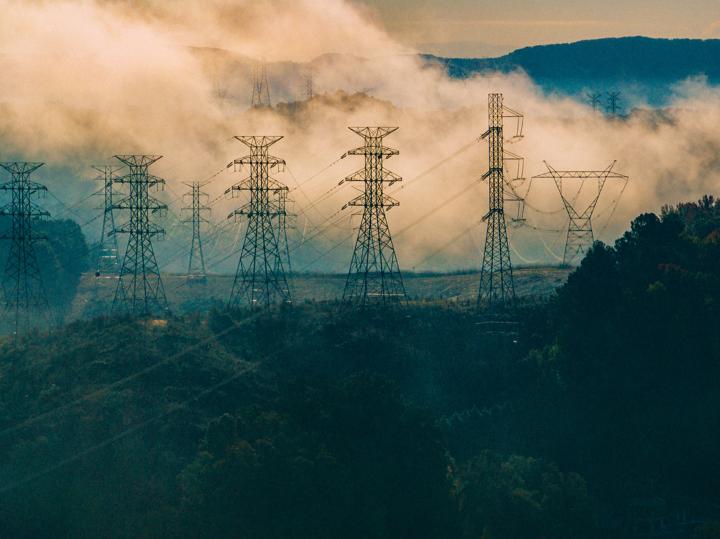
Photo by: Jeremy Poland
[1] https://www.eia.gov/todayinenergy/detail.php?id=67106
[2] https://seia.org/news/report-solar-and-storage-dominate-in-new-trump-administration-as-federal-policies-drive-up-energy-costs/ and https://seia.org/blog/american-energy-under-threat-political-attacks-threaten-half-of-all-planned-power-in-the-u-s/
[3] https://www.spglobal.com/energy/en/news-research/latest-news/electric-power/052025-us-gas-fired-turbine-wait-times-as-much-as-seven-years-costs-up-sharply
[4] See recent Renewable Portfolio Standard changes in CT, and proposed changes in MA and RI, for example.
[5] https://www.nerc.com/globalassets/our-work/assessments/nerc_ltra_2025.pdf